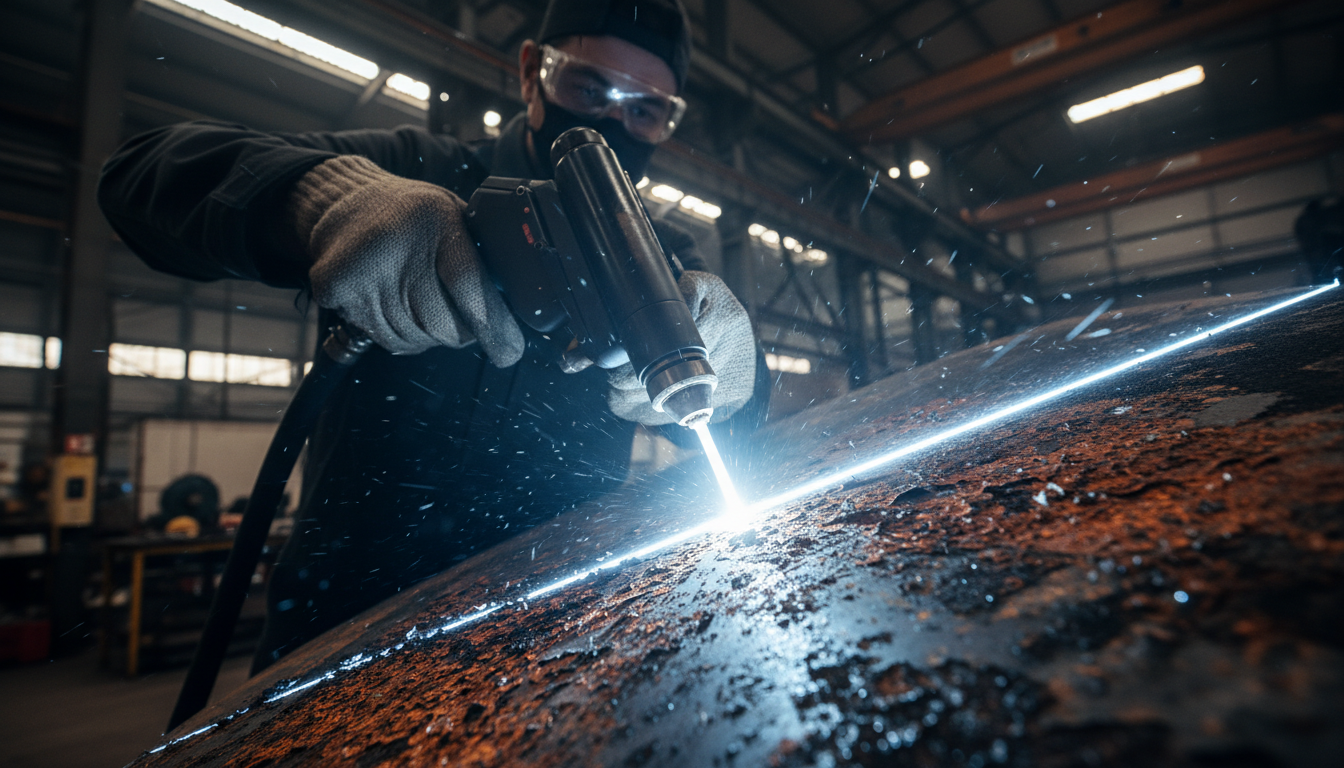
Laser cleaning classic cars provides a precise, non-abrasive method for removing rust, paint, and undercoating without risking damage to the underlying metal surface. This eco-friendly alternative to sandblasting uses light energy to vaporize contaminants; it ensures that delicate engine components and chassis remain structurally intact throughout the restoration process.
Restoring a vintage vehicle is a labor of love, but traditional stripping methods often feel like a gamble with history. Sandblasting and chemical dips frequently leave behind warping, surface pitting, or media trapped in unreachable box sections that eventually leads to new corrosion. For a classic car enthusiast, the risk of compromising thin gauge body panels or erasing original identification marks is a constant concern. At Ablate Laser Cleaning, we prioritize precision over force. This guide explores how pulsed laser technology provides a non-contact, non-abrasive solution that preserves the integrity of your automotive investment. You will learn how we safely navigate delicate body panels, eliminate the nightmare of secondary waste, and recover historical engine markings without damaging the substrate. We will also address professional safety standards and the practicalities of cost for your next restoration project.
Why Traditional Abrasive Methods Often Fail Classic Cars
For decades, automotive restorers have relied on sandblasting and chemical dipping to strip away years of decay. While these methods are effective for heavy industrial frames, they often pose a significant risk to the thinner gauge steel used in vintage bodywork. The most common horror story in the classic car community involves panel warping. This occurs when the kinetic energy of high-velocity grit or the heat generated by friction causes the metal to stretch or distort. Once a large surface like a roof skin or a long door panel loses its tension through oil-canning, the damage is often permanent and requires extensive, expensive remedial work.
Traditional media blasting also introduces a secondary long-term threat: residual grit. It is nearly impossible to completely remove every grain of sand or glass bead from enclosed box sections, sills, and internal pillars. These particles are often hygroscopic, meaning they attract and hold moisture against the internal metal; this leads to inside-out rusting years after the restoration is finished. Chemical stripping carries its own set of risks, as acidic residues can become trapped in seams and eventually leach out to ruin a fresh paint job.
At Ablate Laser Cleaning, we provide precision cleaning for classic cars that circumvents these structural hazards entirely. Laser ablation is a non-destructive process. Because it relies on light energy rather than physical impact or harsh chemicals, there is no risk of thinning the original factory metal or distorting delicate panels. It preserves the integrity of the substrate while lifting contaminants, offering a level of safety that traditional abrasive methods simply cannot match for professional laser cleaning and restoration services.
The Science of Safety: How Pulsed Laser Technology Protects Vintage Metal
The safety of laser cleaning classic cars stems from the physics of light absorption and the specific delivery of energy. At Ablate Laser Cleaning, we utilize a 300W pulsed laser, a tool designed specifically for precision restoration. Understanding the difference between pulsed and continuous wave systems is vital for any owner concerned about the structural integrity of their vehicle. Continuous wave lasers emit a steady, uninterrupted stream of energy; while effective for heavy industrial thick-gauge plate, they can quickly generate excessive heat in automotive steel, risking the very warping we seek to avoid.
In contrast, a pulsed laser operates by delivering millions of micro-bursts of energy per second. These ultra-short pulses are measured in nanoseconds. The energy is so brief that it vaporizes the contaminant before the heat has time to conduct into the underlying metal. This process, known as ablation, relies on the selective absorption of light. Dark, oxidized layers like rust, old lead-based paint, or bitumen underseal are highly absorbent. When the laser hits these materials, they instantly transform into gas and particulate matter.
Feature | Continuous Wave Laser | 300W Pulsed Laser |
|---|---|---|
Energy Delivery | Constant stream | High-frequency micro-bursts |
Heat Transfer | High (conduction to substrate) | Minimal (localised vaporization) |
Best Application | Heavy industrial sections | Delicate vintage bodywork |
Risk of Warping | High on thin gauge steel | Extremely low / Non-existent |
Once the laser reaches the bright, clean surface of the substrate, the physics changes. Bare steel, aluminum, and cast iron are reflective to the specific wavelength of our laser. The energy bounces off the metallic surface rather than being absorbed. This self-limiting characteristic ensures that the cleaning stops exactly where it needs to. The result is a microscopically clean surface that remains cool to the touch, preserving the factory temper and original thickness of the metal. By managing energy at this molecular level, we provide precision cleaning for classic cars that mechanical grinding or heat-based stripping cannot replicate.
Precision Cleaning for Chassis and Delicate Body Panels
The selective nature of precision cleaning for classic cars allows for targeted restoration that was previously impossible without a complete teardown. For enthusiasts throughout Nottinghamshire, the ability to clean complex chassis geometries and suspension components in-situ provides a major logistical advantage. Traditional blasting often necessitates the removal of every rubber bush, brake line, and wiring loom to avoid collateral damage. Our 300W pulsed laser can be guided around these intricate assemblies, lifting road grime and corrosion from the chassis rails while leaving sensitive adjacent parts untouched.
This precision is equally critical for the vehicle's exterior. Large, flat surfaces such as roof skins and long quarter panels are highly susceptible to oil-canning, a distortion caused by the kinetic impact of grit or the thermal expansion of continuous lasers. Because our process involves micro-bursts of energy, the underlying metal remains cool; this preserves the original tension and shape of the panel. Stripping layers of lead-based paint or thick underseal no longer requires risking the structural integrity of the bodywork. By maintaining a stable temperature across the substrate, we ensure that thin-gauge vintage steel stays as flat and true as the day it left the factory.
Solving the Secondary Waste Problem: No More Sand in the Box Sections
Traditional media blasting is inherently messy; it requires hours of post-process cleanup and intense masking to protect the rest of the workshop. The most significant concern for a restorer, however, is not the dust on the floor but the grit that migrates into the vehicle’s internal cavities. In restoration projects, abrasive media inevitably finds its way into sills, A-pillars, and boxed chassis sections. Once trapped, these particles often act as a desiccant, holding onto humidity and creating a micro-environment for corrosion to flourish from the inside out.
Laser cleaning classic cars eliminates this risk because it introduces no secondary waste to the environment. The 300W pulsed laser does not rely on physical media like sand, soda, or glass beads. Instead, it uses light to vaporize contaminants into minute particulates. At Ablate Laser Cleaning, our equipment features integrated high-volume vacuum extraction that captures these vaporized residues immediately at the source. This ensures that the only material removed is the contaminant itself, which is safely filtered away rather than being driven into the car's structural voids. By choosing professional laser cleaning and restoration services, you avoid the nightmare of sand-filled box sections, leaving the metalwork microscopically clean and free from hidden moisture traps.
Restoring Engine Components and Historical Identification Marks
The clean nature of our process extends to the mechanical heart of the vehicle. For engine blocks, aluminium cylinder heads, and transmission casings, laser cleaning classic cars offers a level of finesse that mechanical scrubbing cannot match. Because the 300W pulsed laser targets only the surface contaminants, it leaves the base metal untouched. It does not round off sharp edges or dull the cast finish of aluminium parts, preserving the distinct texture that is often lost during aggressive bead blasting or wire wheeling.
Precision cleaning for classic cars is particularly valuable for documenting provenance. Years of heavy corrosion or thick coats of engine enamel frequently obscure critical identification data. Our laser process gently vaporizes these layers to reveal original VIN numbers, date stamps, and foundry casting marks. For high value heritage vehicles, exposing these authentic details is essential for verifying matching numbers and maintaining market valuation. By removing soot, oil, and scale without altering the underlying metal, we provide a microscopically clean surface ready for inspection or refinishing. This allows restorers to confirm the vehicle's history and ensure that every historical marker is preserved exactly as it left the factory, providing a level of professional laser cleaning and restoration services that prioritizes the car's long term value.
Choosing a Professional: Why Laser Safety Matters in Automotive Restoration
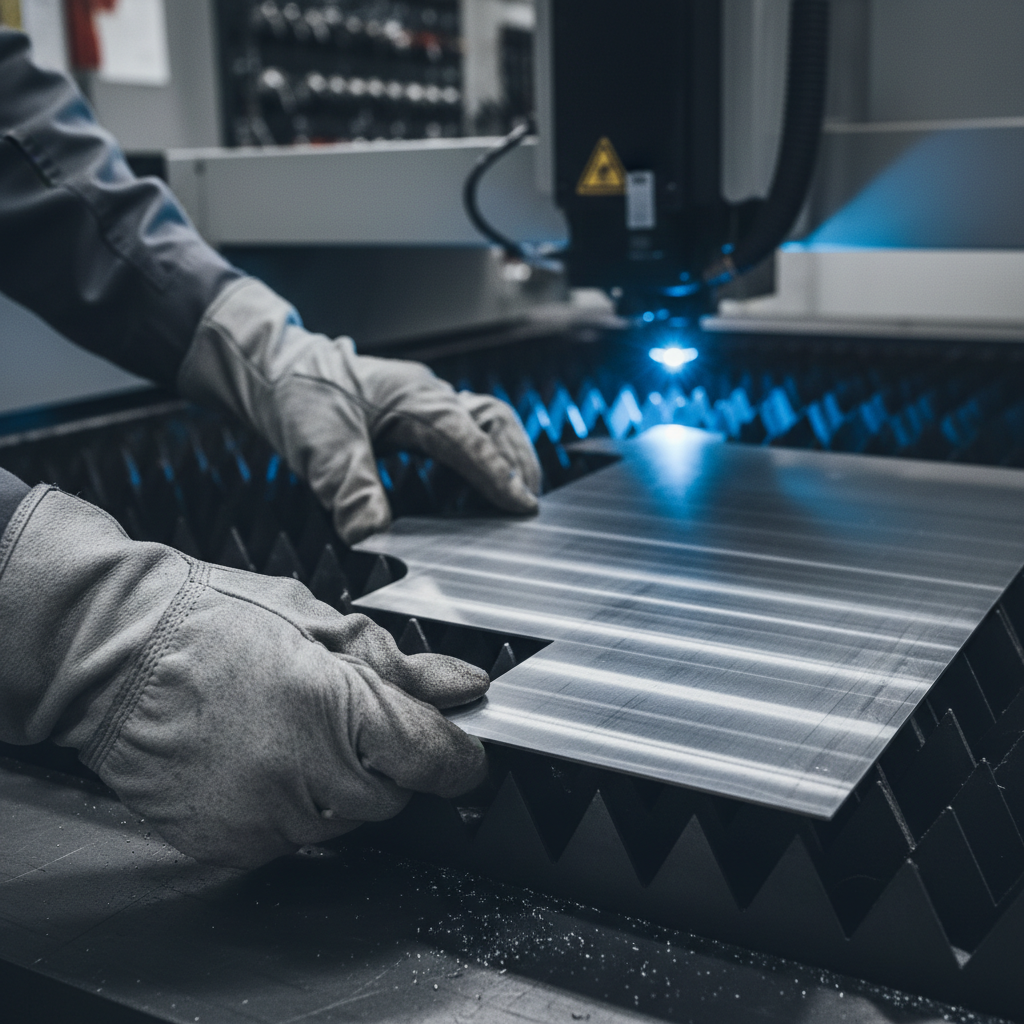
While the 300W pulsed laser is remarkably gentle on vintage steel, the equipment itself remains a high energy industrial tool that requires rigorous oversight. At Ablate Laser Cleaning, every project is managed by a fully Certified Laser Safety Officer. This certification ensures that the complex physics of light ablation are handled with total precision, protecting both the vehicle and the surrounding environment. Operating a class 4 laser involves more than just pulling a trigger; it requires controlled workspace management, specific PPE, and high volume fume extraction to neutralize vaporized contaminants safely.
Choosing a specialist in Hucknall provides local enthusiasts across the East Midlands with the assurance that their project meets strict safety standards. Generalist workshops may offer various stripping methods, but precision cleaning for classic cars at this level requires dedicated expertise. By opting for professional laser cleaning and restoration services, you eliminate the risks associated with improper laser settings or inadequate safety protocols. For those seeking technical advice or a site consultation, you can contact Ablate Laser Cleaning to discuss how our certified standards protect your investment during the restoration process.
How Much Does Laser Rust Removal for Cars Cost?
Determining the price for laser cleaning classic cars requires looking beyond the initial hourly rate. While the operational cost per hour for a 300W pulsed laser is typically higher than that of traditional sandblasting, the total project expenditure is often comparable or even lower when considering the entire restoration workflow. The efficiency of the process stems from the elimination of secondary tasks that usually inflate a workshop bill.
Traditional methods require hours of intensive masking to protect glass, chrome, and rubber from abrasive grit. With laser technology, this preparation is significantly reduced. Furthermore, because the process creates no secondary waste, there is no need for the exhaustive cleanup required to remove sand from chassis rails and interior cavities.
Cost Factor | Traditional Sandblasting | 300W Pulsed Laser Cleaning |
|---|---|---|
Hourly Service Rate | Lower | Higher |
Masking & Prep Time | High | Minimal |
Post-Process Cleanup | Extensive | Virtually Zero |
Risk of Panel Warpage | Significant | Non-existent |
Environmental Disposal | Costly (Contaminated Media) | None (Vacuum Extraction) |
The most significant financial benefit is the mitigation of risk. The cost to repair a warped roof skin or a distorted quarter panel damaged by kinetic impact can easily exceed the price of the cleaning itself. By choosing professional laser cleaning and restoration services, you are making a strategic investment in the longevity of the vehicle. To receive a bespoke estimate for your restoration project in Nottinghamshire or the wider East Midlands, you can contact Ablate Laser Cleaning for a technical assessment.
Restoring a classic car is about more than just aesthetics; it is about preserving history. Laser cleaning provides a gentle, non-abrasive solution that protects the original metal while stripping away decades of rust and grime. If you want expert help managing the delicate restoration of your vehicle, finding the right specialists is essential. You can learn more about our mission to see how we approach these unique projects. We are dedicated to helping you achieve a flawless finish for your restoration.